
These have always been pro-cyclical bets but new banks could erode RoEs.

The new team which is set to be led by all-rounder Hardik Pandya will be called the Gujarat Titans.

'This trend will continue as long as the bull run continues.'

Lord Jo Johnson, younger brother of former British prime minister Boris Johnson, has resigned his non-executive directorship of a UK-based investment firm linked with the now-withdrawn Adani Enterprises Follow-on Public Offer (FPO). 'The Financial Times' newspaper referenced UK Companies House records to reveal that 51-year-old Lord Johnson had been appointed as a director of London-based Elara Capital Plc in June last year and resigned on Wednesday, the day when the Adani Group announced withdrawal of the FPO. Elara, which described itself as a capital markets business raising funds for Indian corporates, was among the bookrunners on the FPO.

ICICI Lombard General Insurance Company reported financial improvement and optimistic commentary in Q4FY24. It reported 17 per cent year-on-year (YoY) growth in Gross Written Premium (GWP) and 115 bps improvement in the Combined Ratio (COR) in FY24, and improved COR guidance with COR going from 104.5 per cent in FY23 to 103.3 per cent in FY24, 102.4 per cent in FY25 and 102.0 per cent in FY26.

Private equity players said their research had shown that the PE share after COVID-19 could go up to 8-10 per cent.

For over a decade, HDFC Bank consistently outperformed industry growth rates in both deposits and advances, maintaining impeccable asset quality. Amid a landscape where other banks struggled with soaring non-performing assets (NPAs), HDFC Bank thrived, eventually surpassing ICICI Bank to become the largest private sector lender in India. Its net interest margin (NIM) remained stable in the range of 4.1-4.4 per cent.

Billionaire Gautam Adani's Adani group on Monday said it has reached an agreement to acquire GVK group's shareholding and control of Mumbai airport.
.jpg)
The decline in the quantum of PE investment in realty sector was due to to less number of deals (13 in H1 2013) as the average ticket size of deals remained same. In first half of 2012, there were 19 PE deals.
Mortgage firm HDFC Ltd on Wednesday announced sale of a 10 per cent stake in its private equity arm HDFC Capital Advisors to a wholly-owned subsidiary of the Abu Dhabi Investment Authority (ADIA) for about Rs 184 crore. ADIA is also the primary investor in the alternative investment funds managed by $3 billion-HDFC Capital. Set up in 2016, HDFC Capital is the investment manager to HDFC Capital Affordable Real Estate Funds 1, 2 and 3; and is aligned with the government's goal to increase housing supply and support the Pradhan MantriAwas Yojana - 'Housing for All' initiative, HDFC Ltd said in a statement.
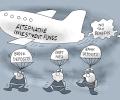
Alternative investment funds (AIFs) - pooled investment vehicles catering to high net worth individuals (HNIs) - saw a 30 per cent increase in investment commitments during financial year 2022-23 (FY23). At the end of March 2023, the total investment commitments raised stood at Rs 8.33 trillion, up Rs 1.92 trillion from Rs 6.41 trillion at the end of March 2022. A commitment is the money clients are willing to put into AIFs.

From the Sensex basket, Kotak Mahindra Bank, HCL Technologies, ICICI Bank, Infosys, Tata Consultancy Services, Wipro, Tech Mahindra and Larsen & Toubro were the major laggards. Mahindra & Mahindra, Nestle, Tata Motors and IndusInd Bank were among the gainers.

The general elections in April/May 2024 are expected to add volatility to the Indian markets, keeping investors on their toes.

Germany-based Mutares SE & Co will acquire 80 per cent controlling stake in Mahindra & Mahindra's French unit Peugeot Motocycles. In a statement, the Mumbai-based auto major on Thursday said Mutares has submitted an irrevocable binding offer to acquire 50 per cent of equity and a controlling stake of 80 per cent in France-based Peugeot Motocycles (PMTC). As part of the deal, Purple, a fully-owned entity of Mutares Holding, would invest 7 million euros in PMTC, which would entitle it to a 50 per cent shareholding and 80.01 per cent voting rights in the French firm.

The Adani group has exited the financial services business by selling its entire 90 per cent stake in Adani Capital and Adani Housing to private equity (PE) firm Bain Capital for Rs 1,440 crore. The total valuation of the Adani financial services business stands at Rs 1,600 crore. Gaurav Gupta, managing director (MD) and chief executive officer (CEO) of the Adani firms will hold the rest of the stake.
Paramount Global has agreed to sell its 13 per cent stake in its Indian TV business to Reliance Industries for Rs 4,286 crore, the Indian firm said on Thursday. In a stock exchange filing, Reliance said it has signed a binding agreement with two subsidiaries of Paramount Global to acquire 13.01 per cent equity stake of Viacom 18 Media Private Limited held by Paramount Global. Similarly, in a filing on the US Securities and Exchange Commission (SEC), Paramount Global said the closing of the transaction is subject to the satisfaction of certain customary conditions, including receipt of applicable regulatory approvals, as well as the completion of a previously announced joint venture involving Reliance, Viacom18 and Star Disney.

Though the Railways is yet to declare any five-year action plan, it is clear the government is not in a position to hand-hold it for any major expansion or upgrade. The issue, however, is how far the Railways can function within the PPP format. Recent history highlights some of the challenges.

Aided by the $57.8-billion merger of HDFC Bank and HDFC, India Inc reported its highest ever mergers and acquisitions in calendar 2022 at $171 billion as against deals worth $145 billion announced last year. The acquisition by the Adani group across cement, media and ports dominated the headlines with the conglomerate making its foray into the cement sector by buying Swiss materials firm Holcim's stake in Ambuja Cements for $6.5 billion. The Adani family's additional $4-billion open offer for Ambuja did not get a response because shareholders preferred to stay invested with the new owner.

This was mostly driven by Qatar Foundation Endowment's $1.26 billion investment in Bharti Airtel.

If Modi wants to leave a real legacy, breaking India's strategic triangulation would be the real gift, notes Shekhar Gupta.

'...similar to the 2008 global financial crisis, the 2012 taper tantrum, or the 2018 midcap crash.' 'This could lead to a substantial decline in activity and revenues for the broking industry.' 'When this will happen is uncertain, but as brokers, we must be prepared for such a downturn.'
'In India, most funds have one or at most two platforms, but we are the only one which has four -- growth equity practice, real estate practice, a special situation and credit platform, and infrastructure.'

'Investors should focus on largecap funds, flexicap funds, business cycle funds, or hybrid-category funds.'
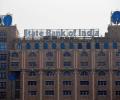
State Bank of India (SBI) on Tuesday announced the launch of its first "state-of-the-art" dedicated branch for start-ups in the country here, to facilitate and support them. The branch launched by SBI chairman Dinesh Khara is located in Koramangala, which alongside neighbouring HSR Layout and Indiranagar are the biggest start-up hubs in the city. "...overall we are in a position to provide end-to-end services to start-ups, with that in mind this particular start-up branch is the first start-up branch we are starting, from the capital city of start-ups- Bengaluru.

From the Sensex pack, State Bank of India, HDFC, Axis Bank, HDFC Bank, Bharti Airtel, Kotak Mahindra Bank, ICICI Bank, Tata Motors, NTPC and Bajaj Finserv were the major gainers.

Among the Sensex firms, JSW Steel, Tata Motors, Tata Steel, Tata Consultancy Services, NTPC, Wipro, HCL Technologies, State Bank of India, Larsen & Toubro, UltraTech Cement, IndusInd Bank, Kotak Mahindra Bank, Power Grid and Reliance Industries Limited were the major laggards. Mahindra & Mahindra and Bajaj Finance were the gainers.

An average Indian couple spends around 2x on weddings versus education (pre-primary to graduation).

'Somebody was using somebody to make statements that will stir the stock market and lead to a surge.' 'A sudden surge and a sudden crash is always an ideal situation for people to make illicit gains and then siphoning off the money.'

The new government that presents the full Budget for 2024-2025 in July should be ready to restructure the way divestment is managed and implemented, proposes A K Bhattacharya.

Benchmark indices Sensex and Nifty fell for the third day running on Thursday, dragged by continuous selling in HDFC Bank and profit-taking in consumer durables and utility shares. The 30-share BSE Sensex fell by 313.90 points or 0.44 per cent to settle at 71,186.86. During the day, it tanked 835.26 points or 1.16 per cent to 70,665.50.
Banks to get more aggressive and act like PE investors

Hyderabad evolved as a preferred investment destination during 2007-2008.

PremjiInvest has invested close to $20 million in the hospital chain in the last three years.

JP Morgan may buy stake in debt -laden SpiceJet
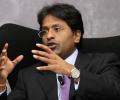
Unwilling to jeopardise its cordial relationship with the all-powerful BCCI, the England and Wales Cricket Board (ECB) has rejected a lucrative 10-year buy-out offer of their franchise-based property 'The Hundred' from former IPL commissioner Lalit Modi, the Daily Telegraph reported.

The issue will comprise a secondary share sale worth Rs 600 crore by private equity major Everstone Capital and fresh fundraising worth Rs 400 crore.

Venture capitalists and private equity players have slowed investments in Indian start-ups.

Are you a first-time IPO investor? Even if IPOs appear attractive with expectations of high returns, they come with risks and complexities, cautions Sheetal Jhaveri and shares her checklist to help you navigate through the world of IPOs

Unlike many other B-schools, IIM Ahmedabad follows a cluster system of final placements process where sectors are invited in cohorts at regular intervals.
Sachin and Binny Bansal are the faces of the e-commerce sensation but other investors dominate the board.
